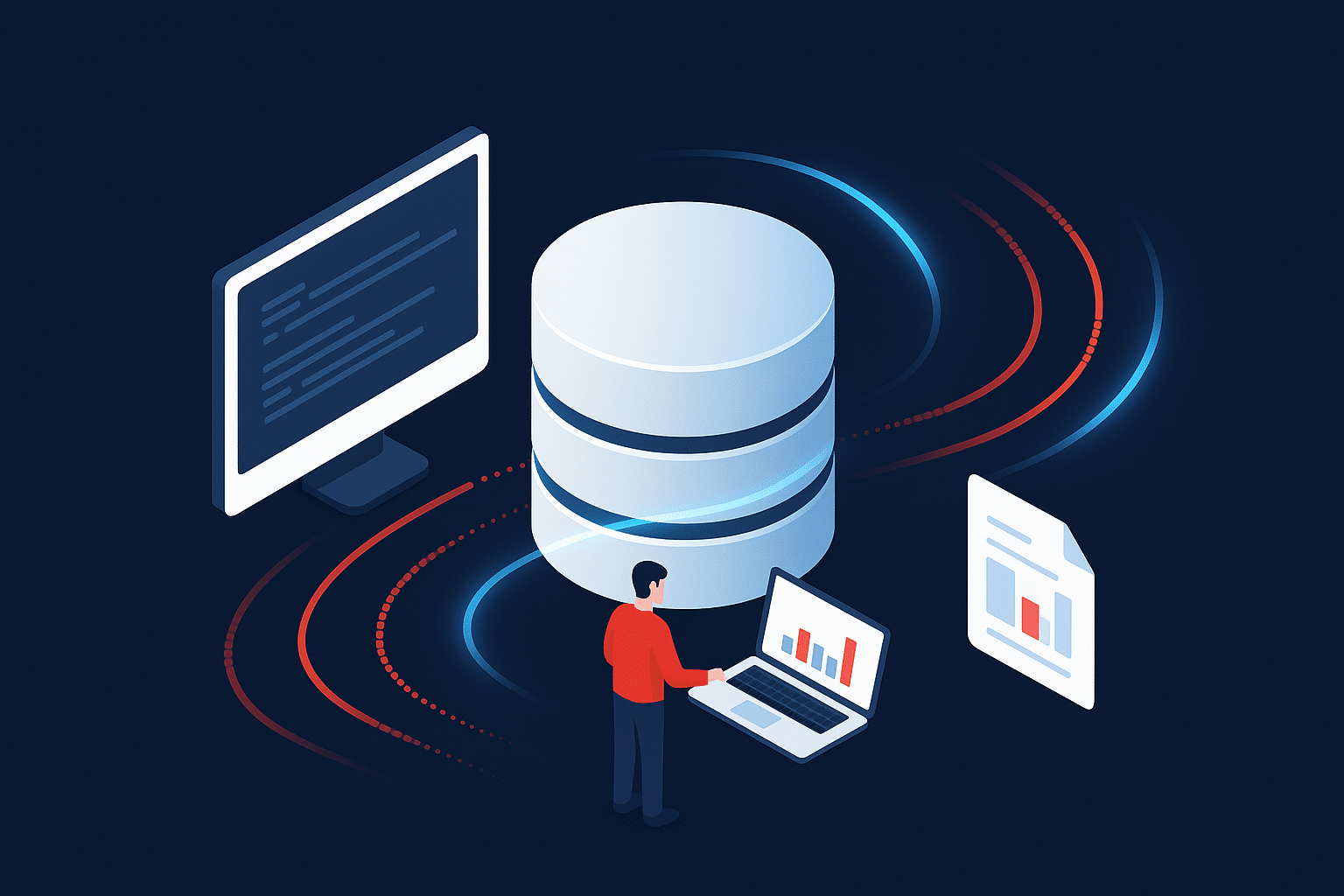
A well-structured DBA’s daily routine is what separates a proactive database team from one that only reacts once something has already broken. If you are a database administrator, it is important to take at least 15 minutes every day when you start work to do a routine check. Of course, this time may vary depending on how many environments you manage and the intensity of the system you manage. These short-term checks will give you a big time and performance boost when you prepare your month-end reports.
Below I have shared with you the items that you need to do routine checks and their explanations.
What Should Be in a DBA’s Daily Routine?
- Regular Backups (Backup): We can start by checking whether backups are taken on a daily basis. This check ensures that your database is protected and you are prepared for possible data loss scenarios.
- Monitor Disk Space utilization and Drive Space Thresholds: This item is important to prevent performance issues. Reaching 100 percent of your disk space can negatively affect the performance of your computer or server. By monitoring disk space usage, you can determine when your drive is approaching the limit of its capacity and performance issues may occur. By checking daily, you can recognize problems in advance and take the necessary steps to resolve them.
- Monitoring Long Running Queries and Deadlocks: Long running queries and deadlocks are important issues that can negatively affect database performance. Therefore, early detection and resolution of these issues is important to ensure the healthy functioning of the database system. As you know, long-running queries can slow down the database server and make other users’ queries wait. This negatively affects the user experience and can harm the company’s business processes. In addition, long-running queries create unnecessary load on the database server, which can lead to more serious problems such as freezes and crashes. Deadlocks are a condition in database transactions that locks a set of transactions and prevents other transactions from accessing the same resources. In this case, one transaction denies access to other transactions and the database system comes to a complete halt. Deadlocks are usually caused by errors in the database design or bugs in the application software and should therefore be detected and resolved early.
- Monitoring Key Performance Metrics such as CPU and Memory Utilization: It is important to include this step in your routine. CPU and memory utilization of a database system is one of the most important indicators of system performance. High CPU utilization indicates that the server is overloaded and queries are slowing down or may even cause a system crash. Therefore, monitoring performance metrics such as CPU utilization helps to detect and prevent overload situations in the database system.
- Monitoring and Warning about Blocking: This item may be one of the most serious problems for a database system.These problems occur when there are conflicts over resources (records, tables, etc.) between multiple transactions or queries.This can slow down or completely stop transactions or queries. Blocking is a condition that prevents a transaction from accessing other transactions. For example, when a transaction locks a table, other transactions are prevented from accessing the same table. This situation makes one transaction hold up the others and severely affects performance. The blocking problem occurs more frequently with increasing transaction load on the database system. It is necessary to make the necessary query examinations and kill it or, if necessary, talk to authorized persons to reorganize this query.
- Failed Jobs Monitoring and Alerting : Failed transactions can occur for many different reasons in a database system or application software. For example, a transaction may fail due to a bug in a database system or application software, a server outage, or a network problem.Therefore, monitoring failed transactions and receiving alerts is important to ensure the healthy operation of the database system or application software.Furthermore, monitoring failed transactions can help prevent similar problems in the future. For example, a transaction may fail when it cannot access a particular data source. Monitoring and resolving such an issue can prevent similar problems from recuExplore ServicesSQL Server Consulting
Need expert support for SQL Server?
Our senior database team supports SQL Server performance tuning, health checks, migrations, Remote DBA services and urgent operational issues.
rring in future transactions.
- Monitoring and Alerting Failed Logins: As a DBA, it is necessary to examine failed login attempts to ensure the security of the system. This may indicate that someone is trying to gain unauthorized access to the system or application. By monitoring and alerting these attempts, IT teams can quickly identify potential security threats and take appropriate measures to prevent them.These failed login attempts can also impact user experience.They can be frustrating for users and can cause them to lose confidence in the system or application. Monitoring and alerting of these events allows IT teams to proactively identify issues and resolve them before they become major problems, thus improving the user experience. Monitoring and alerting of failed login attempts can also be useful for troubleshooting purposes. If users are having difficulty logging in, IT teams can quickly identify the problem and take corrective action, minimizing downtime and reducing the negative impact to users.
- Monitor and Alert on the Growth of Large Tables: Large tables in the database cause queries and transactions to slow down and consume storage resources. Further growth of large tables also affects data integrity. For example, if a table is too large, it can cause backup operations to take too long and data loss during backup. Failure to address these issues can lead to performance loss.This is a situation we do not want:)It is useful to provide daily checks.
- Monitoring and Alerting to Security Changes such as Users, Roles, and Access Rights: Examining this item helps database administrators create a more secure environment for database security. In addition, if a particular user’s authorization is accidentally or maliciously increased, there may be a risk of data manipulation or even data loss in the database. Therefore, monitoring and appropriately translating any changes in users, roles and access rights into alerts helps database administrators maintain data integrity. In addition, for the security and privacy of database users, changes such as deleting user accounts or restricting access rights should also be monitored. Monitoring these changes enables database administrators to help manage user accounts securely.As a result, changing users, roles and access rights should be under the control of database administrators and should be monitored. In this way, database security is made more secure in many areas such as compliance, data confidentiality and integrity, phishing and insider threats. Monitoring and alerting processes raise awareness on these issues and help detect potential threats in advance.
- Monitor and Alert on Changes to Server Settings and Configurations: Database servers have a set of settings and configurations for the correct and efficient operation of database systems. These settings are determined by factors such as the server’s hardware capacity, operating system, database software, and network performance. For example, misconfiguring a particular setting may prevent the server from running efficiently or put database integrity at risk. This item should also be reviewed on a daily basis.
- Monitor Replication and Log Shipping Status: Database administrators want to monitor the status of data replication and log shipping operations where data copy operations are performed between the primary server and the secondary server.
This ensures that data integrity is maintained and backup operations are performed successfully.
Furthermore, during data replication and log submission, care must be taken to maintain data integrity and data security. Monitoring and alerting processes can help in this regard. For example, any changes to log files or replication operations can be automatically detected and measures can be taken to protect data integrity.
These metrics can be used to detect and prevent potential problems in database performance early. This, in turn, reduces the workload on the database system, positively impacting the user experience and the company’s business processes.
Of course, you can also increase the number of these items or adjust them according to your own database environment.
Related Reading
SQL Server Managed DBA Services
Let Us Handle Your Day-to-Day SQL Server Operations
Aryasoft’s Remote DBA team manages maintenance plans, job/agent administration and ongoing server operations proactively.