TABLE OF CONTENTS
- •What Is a SQL Server Upgrade?
- •Which Versions Can Upgrade to SQL Server 2025?
- •Current Support Status of SQL Server Versions
- •Let’s Plan Your SQL Server Upgrade in Technical Detail
- •In-Place Upgrade or Side-by-Side Migration?
- •In-Place Upgrade
- •Side-by-Side Migration
- •How Do You Migrate from SQL Server 2012 to SQL Server 2025?
- •Pre-Upgrade Assessment for SQL Server
- •SQL Server Version and Edition
- •Operating System Compatibility
- •Deprecated and Discontinued Features
- •Application Dependencies
- •Why Does Database Compatibility Level Matter?
- •Why Should Performance Be Tested After an Upgrade?
- •Upgrading Always On and High Availability Environments
- •Backup and Rollback Plan
- •Assess Your Current Environment Before a SQL Server Upgrade
- •How Is a SQL Server Upgrade Process Planned?
- •1. Discovery and Inventory
- •2. Upgrade Assessment
- •3. Target Architecture and Migration Method
- •4. Test Environment and Compatibility Checks
- •5. Cutover and Rollback Planning
- •6. Upgrade or Migration
- •7. Validation and Stabilization
- •8. Performance Optimization
- •Common Mistakes in the SQL Server Upgrade Process
- •SQL Server Upgrade Checklist
- •When Should a SQL Server Upgrade Be Planned?
- •Frequently Asked Questions
- •Can you upgrade from SQL Server 2016 to SQL Server 2025?
- •Can you upgrade directly from SQL Server 2012 to SQL Server 2025?
- •Does a SQL Server upgrade require downtime?
- •Is in-place upgrade or side-by-side migration safer?
- •Should the compatibility level be raised immediately after a SQL Server upgrade?
- •What tests should be run before a SQL Server upgrade?
- •Plan Your SQL Server Upgrade Process in a Controlled Way
- •Let’s Plan Your SQL Server Migration
A SQL Server upgrade is not just about installing a new SQL Server version and moving existing databases over. Application dependencies, compatibility level, the operating system, drivers, high availability architecture, backup and recovery plan, cutover duration, and rollback scenario all need to be evaluated together before the migration.
Upgrade planning has become especially critical for organizations still running SQL Server 2016 or older. Extended support for SQL Server 2016 ended on July 14, 2026. SQL Server 2014 has been outside normal extended support since 2024.
In this guide we cover SQL Server upgrade options, which versions support a direct upgrade path to SQL Server 2025, the differences between in-place upgrade and side-by-side migration, and the steps worth evaluating for a controlled transition.
What Is a SQL Server Upgrade?
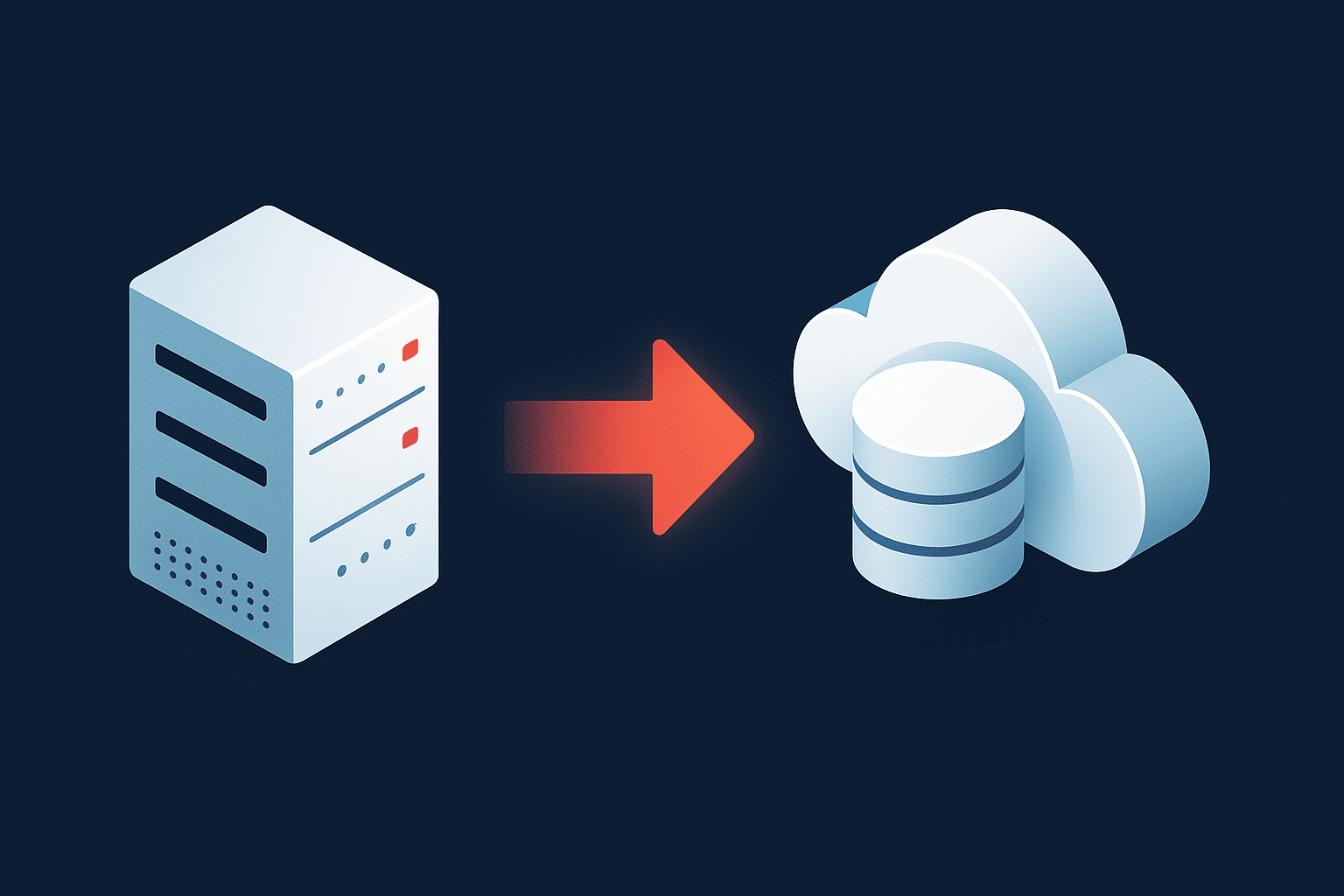
A SQL Server upgrade means moving an existing SQL Server environment to a newer SQL Server version. Technically, however, this transition can be carried out using different methods.
The main options are:
- In-place upgrade: Upgrading the existing SQL Server instance to the new version on the same server
- Side-by-side migration: Setting up a new SQL Server environment separately and moving the database and related components to it
- Platform migration: Moving to a different server, virtualization platform, or cloud environment alongside the upgrade
Which method is appropriate depends on the current SQL Server version, infrastructure, downtime tolerance, application dependencies, and rollback requirements.
Which Versions Can Upgrade to SQL Server 2025?
According to Microsoft’s current SQL Server 2025 supported upgrade paths, a direct upgrade to SQL Server 2025 is supported from the following versions:
| Current SQL Server Version | In-Place Upgrade to SQL Server 2025 | Note |
|---|---|---|
| SQL Server 2022 | Yes | Supported upgrade path |
| SQL Server 2019 | Yes | Supported upgrade path |
| SQL Server 2017 | Yes | Supported upgrade path |
| SQL Server 2016 SP3+ | Yes | SP3 or later required |
| SQL Server 2014 SP3+ | Yes | SP3 or later required |
| SQL Server 2012 and older | No | Migration to SQL Server 2025 must be planned instead |
The important distinction here is that upgrade and migration are not the same thing. For example, SQL Server 2012 cannot be upgraded in place directly to SQL Server 2025, but its databases can be migrated to a new SQL Server 2025 environment.
Current Support Status of SQL Server Versions
An upgrade decision shouldn’t be based only on new features. The Microsoft support lifecycle status of the SQL Server version in use should also be evaluated.
| Version | End of Extended Support | Status |
|---|---|---|
| SQL Server 2012 | July 12, 2022 | Support ended |
| SQL Server 2014 | July 9, 2024 | Normal support ended; ESU options available |
| SQL Server 2016 | July 14, 2026 | Normal extended support ended |
| SQL Server 2017 | October 12, 2027 | Extended support ongoing |
| SQL Server 2019 | January 8, 2030 | Extended support ongoing |
| SQL Server 2022 | January 11, 2033 | Support ongoing |
For organizations still running SQL Server 2012, 2014, or 2016 in particular, evaluating the existing environment for upgrade or migration is important.
SQL Server Upgrade Support
Let’s Plan Your SQL Server Upgrade in Technical Detail
Aryasoft reviews your existing SQL Server environment, application dependencies, compatibility status, and infrastructure requirements to plan your upgrade or migration process.
In-Place Upgrade or Side-by-Side Migration?
One of the most important decisions in a SQL Server upgrade project is choosing between upgrading the existing instance directly or setting up a new environment.
In-Place Upgrade
During an in-place upgrade, the existing SQL Server instance is upgraded to the new SQL Server version on the same server.
Advantages:
- Can reduce the need to set up a new SQL Server environment
- Server and instance names can be preserved
- Application connection string changes can be more limited
- Operational effort can be lower in smaller, simpler environments
On the other hand, because the existing system is changed directly, the rollback process can be more complex than with a side-by-side approach. Any operating system, application, or database compatibility issues that could arise during the upgrade need to be tested in advance.
Side-by-Side Migration
In the side-by-side approach, the new SQL Server version is installed on a separate server or virtual machine. The databases and required SQL Server components are moved to the new environment in a controlled way.
Advantages of this approach:
- The existing production environment can be preserved until the migration is complete
- The new environment can be tested beforehand
- A more controlled rollback plan can be created
- A new operating system and hardware architecture can be adopted
- Core and resource capacity can be re-planned
- The existing SQL Server architecture can be modernized
Side-by-side migration can be a more controlled option, particularly for critical production environments, older SQL Server versions, or projects where infrastructure modernization is planned at the same time.
How Do You Migrate from SQL Server 2012 to SQL Server 2025?
A direct in-place upgrade from SQL Server 2012 to SQL Server 2025 is not supported.
Instead, a new SQL Server 2025 environment must be created and the database and related SQL Server components moved via migration.
Migrating the user databases alone may not be enough. Depending on the environment, the following components also need to be reviewed:
- SQL Server logins
- SQL Agent Jobs
- Linked Servers
- Credentials
- Database Mail configurations
- SSIS packages
- Maintenance jobs
- Server-level configuration
- Security and permission structure
- Application connection information
The SSMS Migration Component in Microsoft’s current SQL Server tooling can assess older SQL Server versions for upgrade purposes and report breaking changes, behavior changes, deprecated features, and compatibility issues.
Pre-Upgrade Assessment for SQL Server
The first step in an upgrade project is a detailed assessment of the existing SQL Server environment.
The assessment should cover the following areas:
SQL Server Version and Edition
The current SQL Server version, build, service pack, or cumulative update level should be identified. The supported upgrade path can vary depending on the current build in use.
Operating System Compatibility
When upgrading the SQL Server version, you need to check whether the current Windows Server version supports the target SQL Server version.
For example, SQL Server 2025 on Windows can run on Windows Server 2019 and later supported Windows Server versions. Current requirements should be verified against Microsoft’s SQL Server 2025 hardware and software requirements documentation.
Deprecated and Discontinued Features
Some features used in older SQL Server versions may behave differently or no longer be supported in the new version.
For this reason, it’s not enough to check whether the database opens successfully — how the SQL Server features your application uses will behave in the new environment should also be evaluated.
Application Dependencies
Applications, services, reporting systems, and integrations connecting to SQL Server should be identified.
The following areas in particular should be checked:
- Connection strings
- ODBC and OLE DB drivers
- .NET and application framework versions
- Linked Server connections
- Third-party application support
- SQL Server compatibility status of ERP and other enterprise software
Why Does Database Compatibility Level Matter?
The SQL Server instance version and the database compatibility level are not the same thing.
When a database is moved to a newer SQL Server version, the compatibility level is not always automatically raised to the new engine level. This allows applications to retain, to some extent, prior database behavior while running on the new SQL Server engine.
Application queries and workload should be tested before moving to a new compatibility level.
Microsoft notes that the current database compatibility level can be checked via sys.databases and changed when needed with ALTER DATABASE ... SET COMPATIBILITY_LEVEL.
Because a compatibility level change can particularly affect query optimizer behavior and query plans, it should not be applied in production without testing.
Why Should Performance Be Tested After an Upgrade?
Even if the move to a new SQL Server version is technically successful, application performance should not be assumed to stay the same.
Changes to the SQL Server engine, cardinality estimation, query optimizer, and compatibility level can cause some queries to use a different execution plan.
For this reason, establishing a performance baseline before the upgrade is important.
As part of the baseline, you might record, for example:
- CPU usage
- Memory usage
- Disk latency
- Query duration
- Wait statistics
- Blocking
- Deadlocks
- Top resource-consuming queries
- Batch requests
- Database growth rates
The same metrics can be reviewed again after the upgrade to compare performance changes.
Upgrading Always On and High Availability Environments
In environments using Always On Availability Groups or a Failover Cluster Instance, a SQL Server upgrade requires separate planning.
The upgrade order, replica roles, failover plan, application connection structure, and downtime target should all be evaluated together.
In Always On environments in particular, the following questions should be answered:
- In what order will the primary and secondary replicas be upgraded?
- Will a failover occur during the upgrade?
- Do application connections go through the listener?
- How will the rollback scenario be implemented?
- How will database synchronization be verified?
- How will HA and DR testing be carried out after the upgrade?
In these environments, the upgrade is not just about the database engine running — it’s a controlled transition of the high availability architecture itself.
Backup and Rollback Plan
Rollback criteria should be defined for every SQL Server upgrade project before technical implementation begins.
The plan should cover the following areas:
- Full database backup
- Transaction log backup
- System database backup
- SQL Server configuration records
- Login and job backups
- Time limit for the rollback decision
- Application rollback steps
- Reverting DNS or connection changes
One of the key advantages of the side-by-side migration approach is that the old SQL Server environment can be kept in a controlled state until after cutover.
Assess Your Current Environment Before a SQL Server Upgrade
Aryasoft builds your migration plan by reviewing SQL Server version, database compatibility, application dependencies, performance, HA/DR structure, and migration risks before the upgrade.
How Is a SQL Server Upgrade Process Planned?
1. Discovery and Inventory
We review your existing SQL Server instances, databases, applications, integrations, and infrastructure components.
2. Upgrade Assessment
We evaluate the current version and edition, the supported upgrade path, compatibility status, deprecated features, and infrastructure requirements.
3. Target Architecture and Migration Method
We clarify the right transition method for your environment by evaluating in-place upgrade, side-by-side migration, or platform migration options.
4. Test Environment and Compatibility Checks
For suitable projects, we run the migration scenario in a test environment and review application compatibility and database workload behavior.
5. Cutover and Rollback Planning
We define the downtime target, migration sequence, application connections, backup steps, and rollback criteria.
6. Upgrade or Migration
We carry out the SQL Server upgrade or migration process according to the planned method.
7. Validation and Stabilization
We check database access, applications, jobs, integrations, security, performance, and high availability components.
8. Performance Optimization
After the upgrade, we monitor workload behavior and critical queries and carry out the necessary performance tuning work.
Common Mistakes in the SQL Server Upgrade Process
- Planning an upgrade without checking the current SQL Server build level
- Skipping application compatibility testing
- Not checking operating system requirements
- Only considering user databases
- Forgetting server-level objects such as logins, jobs, and Linked Servers
- Changing the compatibility level without testing it
- Not establishing a performance baseline before the upgrade
- Treating Always On and cluster environments like a standard standalone instance
- Not preparing a rollback plan
- Not sufficiently validating application and performance after the upgrade
SQL Server Upgrade Checklist
- Has the current SQL Server version and build been identified?
- Is the target SQL Server version clear?
- Has Microsoft’s supported upgrade path been verified?
- Has operating system compatibility been checked?
- Have edition features been compared?
- Have database compatibility levels been listed?
- Have deprecated or discontinued features been reviewed?
- Have application dependencies been identified?
- Has driver and connection compatibility been checked?
- Has an inventory of SQL logins and permissions been created?
- Have SQL Agent Jobs been reviewed?
- Have Linked Servers and integrations been identified?
- Have backup and restore tests been completed?
- Has a performance baseline been established?
- Has the upgrade method been decided?
- Has a cutover plan been prepared?
- Have rollback criteria been defined?
- Has the HA/DR scenario been tested?
- Is a post-upgrade validation plan ready?
When Should a SQL Server Upgrade Be Planned?
Evaluating your SQL Server environment for an upgrade may be worthwhile if any of the following apply:
- The support period for the SQL Server version in use has ended or is approaching its end
- Infrastructure is being renewed due to an older Windows Server version
- The current SQL Server version no longer meets application or security requirements
- You plan to take advantage of new SQL Server features
- Database server or storage infrastructure is being renewed
- A migration to cloud or hybrid infrastructure is planned
- SQL Server environments are being consolidated
- The existing HA/DR architecture is being redesigned
Rather than starting the upgrade project right before the support end date, planning ahead with enough time for assessment, testing, and migration provides a more controlled transition.
Frequently Asked Questions
Can you upgrade from SQL Server 2016 to SQL Server 2025?
Yes. Microsoft offers a supported in-place upgrade path from SQL Server 2016 SP3 or later to SQL Server 2025. However, application compatibility, the operating system, and other infrastructure requirements should be checked separately before the transition.
Can you upgrade directly from SQL Server 2012 to SQL Server 2025?
No. A direct in-place upgrade from SQL Server 2012 to SQL Server 2025 is not supported. Instead, a database migration to a new SQL Server 2025 environment can be planned.
Does a SQL Server upgrade require downtime?
Downtime requirements depend on the upgrade method used and the existing architecture. During an in-place upgrade the instance is unavailable, while side-by-side and high-availability-based migration approaches can allow downtime to be planned differently.
Is in-place upgrade or side-by-side migration safer?
No single method is right for every environment. Side-by-side migration can preserve the existing production environment during the transition and offer more flexibility for rollback. In-place upgrade can require fewer infrastructure changes in suitable, simpler environments.
Should the compatibility level be raised immediately after a SQL Server upgrade?
It doesn’t need to be raised immediately in every case. The compatibility level change can be planned separately once the database workload and applications have been tested on the new SQL Server engine.
What tests should be run before a SQL Server upgrade?
Application compatibility, database integrity, backup/restore, performance baseline, critical queries, jobs, integrations, security, HA/DR, and rollback processes should all be evaluated before the upgrade.
Plan Your SQL Server Upgrade Process in a Controlled Way
A SQL Server upgrade is not just about moving existing databases to a new version. Version compatibility, the operating system, application dependencies, performance, HA/DR, and rollback processes all need to be planned together.
Especially with older versions like SQL Server 2012, 2014, and 2016, the goal may not just be moving to a new SQL Server version, but re-evaluating the existing architecture and operating model as well.
At Aryasoft, we analyze your existing SQL Server environment and provide technical support for upgrade assessment, migration planning, testing, cutover, validation, and post-transition stabilization.
Related Reading
SQL Server Upgrade & Migration
Let’s Plan Your SQL Server Migration
Let’s evaluate your current SQL Server version, application dependencies, and infrastructure together to determine the right transition path for upgrade or migration.